Skip to content
Connected Devices

AI Implementation for Voice Recognition in Mobile Apps

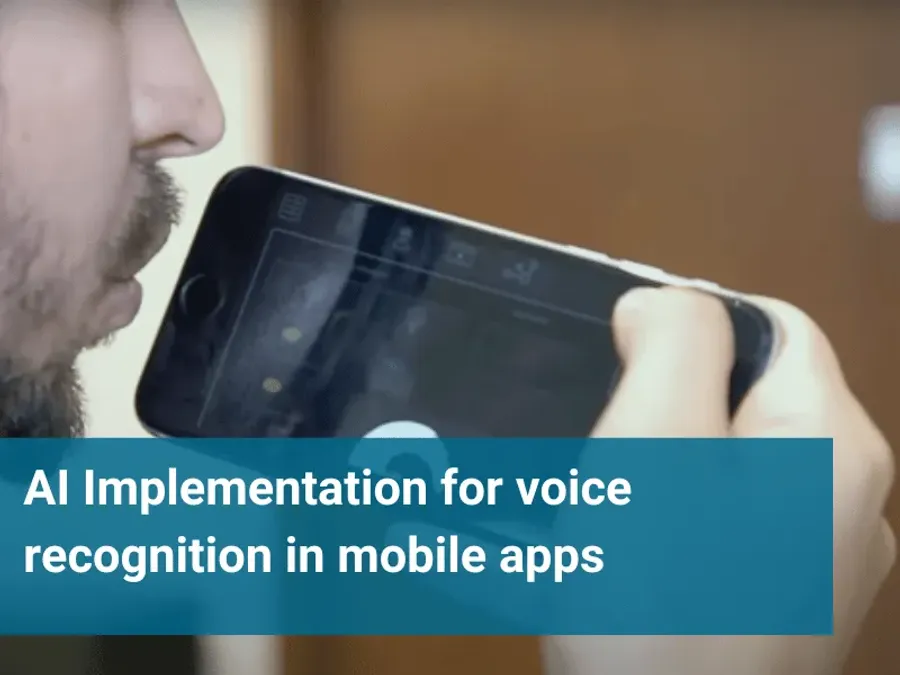
The CodeBranch's dedicated development team worked on the development of a voice recognition system that allows people to control and monitor home automation systems through a mobile application.

Quick Summary

  • The CodeBranch's dedicated development team worked on the development of a voice recognition system that allows people to control and monitor home automation systems through a mobile application.
  • Delivered a voice control system based on artificial intelligence working on both Android and iOS.
  • Enabled a home automation system that responds to voice commands given naturally in context.
Tech Stack: Native AI-embedded technologies (mobile) Objective C Java
AI Implementation for Voice Recognition in Mobile Apps

Overview

CodeBranch's dedicated development team has created a voice recognition system that allows people to control and monitor home automation systems through a mobile application. It used artificial intelligence for voice recognition and worked on both Android and iOS. The system worked in English and Spanish and allowed commands to be given in context, so users didn't need to give exact commands. For example, "Turn on the light" or "Turn the light on" — both options were understood by the system.

Industries

Connected Devices IoT Construction

Services Provided

  • Mobile Development
  • Custom Software Development
  • AI Development

Approach

The technology used in this project was native AI-embedded technologies on the mobile devices, Objective C, and Java. The solution was built natively for both Android and iOS platforms to leverage on-device AI capabilities for voice recognition. This project involved two developers — one senior and one semi-senior developer.

1x Senior Developer
1x Semi-Senior Developer

Results

  • Delivered a voice control system based on artificial intelligence working on both Android and iOS.
  • Enabled a home automation system that responds to voice commands given naturally in context.
  • Supported bilingual voice recognition in both English and Spanish without requiring exact command phrasing.

Find Out More

Frequently Asked Questions

Does the voice recognition system work offline or does it require an internet connection?
The system uses native AI-embedded technologies directly on the mobile device, which means core voice recognition capabilities run on-device without requiring a constant internet connection for every command.
What languages does the voice control system support?
The system supports both English and Spanish, and it is designed to understand natural, contextual phrasing rather than requiring users to memorize exact commands.
Can this solution be extended to support additional smart home devices?
Yes. The architecture is designed to integrate with home automation systems, and the command structure can be extended to include additional devices and actions as the smart home ecosystem grows.
How does the AI handle ambiguous or different phrasings of the same command?
The AI is trained to understand contextual commands, so variations like "turn on the light" and "turn the light on" are both recognized as the same intent, significantly reducing user friction.
Was this application built separately for Android and iOS?
Yes. The solution was developed natively for both platforms — using Objective C for iOS and Java for Android — to make full use of each platform's native AI-embedded capabilities.

Related Case Studies

Ready to Build Something Great?

Let's discuss your project and find the perfect solution for your business.