Quick Summary
- ▸ Built for a electrical construction company (200 employees) in Medellin, Colombia.
- ▸ CodeBranch built the full technology stack for an IoT home automation ecosystem designed and manufactured in Medellín — firmware, mobile app, cloud infrastructure, and OTA update server — with a mission to democratize smart home technology for mass housing construction in Colombia.
- Full product lifecycle delivered — from proof of concept through MVP to final manufactured product with regulatory certification.
- Zero-configuration device onboarding — devices self-configure on the home network and appear in the app without installer intervention.
Overview
CodeBranch developed the complete technology stack for an IoT home automation ecosystem designed and manufactured in Medellín, Colombia — from embedded firmware and industrial hardware support through a mobile control app and cloud infrastructure.
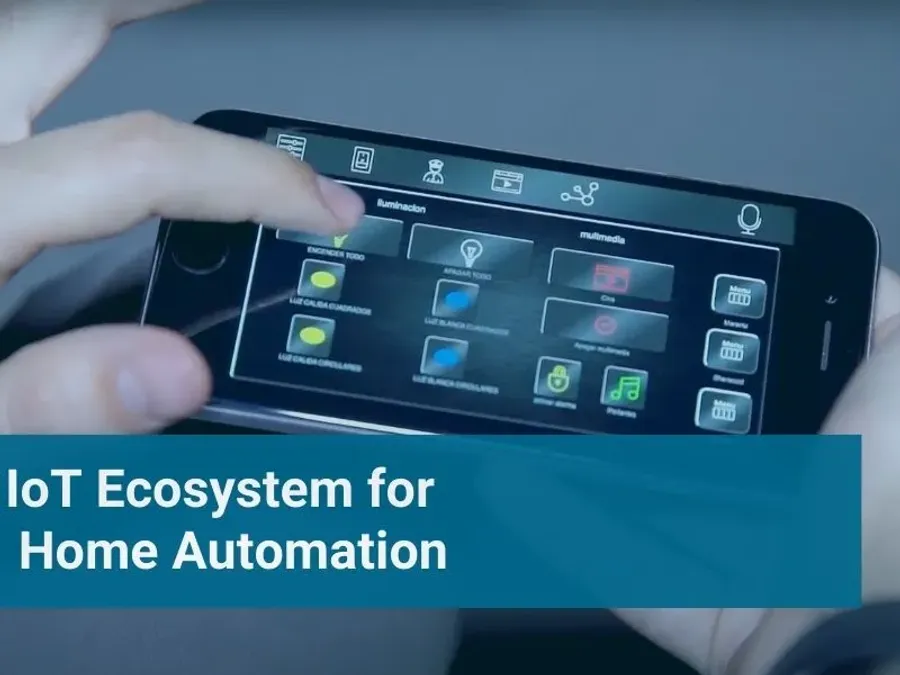
The ecosystem centers on the INL8, an 8-zone electrical load controller built for wall-niche installation in residential construction. Paired with the Inmote mobile app, it gives homeowners control over lighting, security, motorized curtains, audio, and energy consumption — while giving construction companies a turnkey smart home solution that requires no specialized labor to install.
The project was driven by a mission to democratize access to IoT technology in Colombia's housing market — making smart home features viable not just for high-end properties, but for mass construction projects including affordable housing developments, where cost per unit and installation simplicity are decisive factors.
The engagement spanned seven years, progressing from proof of concept through MVP to a manufactured, certified product deployed across residential construction projects.
Industries
Services Provided
Approach
CodeBranch assembled a cross-functional team of 8 — including 3 senior developers, 2 semi-senior developers, 1 UI/UX designer, and 1 industrial designer — and worked across the full product lifecycle over seven years.
Firmware was developed in C for FreeRTOS on the ESP32 microcontroller. The Inmote mobile app was built as a hybrid application using Cordova with a React/JavaScript frontend. The cloud backend runs on PostgreSQL, and a proprietary OTA update server was written in Python for secure firmware distribution.
The project progressed through three major stages: proof of concept (validated with target users), minimum viable product (refined through iterative testing), and final product development including manufacturing and regulatory certification before official entities.
The INL8 hardware was designed for the construction industry's constraints: it installs in a standard wall niche, requires no internet during installation, operates immediately via its physical keypad, and connects to the Inmote app when Wi-Fi becomes available.
Here is what the ecosystem includes — from the controller module installed in the wall to the mobile app in the homeowner’s hand.
The INL8 controller module
The hardware heart of the ecosystem. An 8-zone electrical load controller designed for wall-niche installation in residential construction projects.
- 8 independent zones — each supporting 0–240 VAC at up to 15A (50/60 Hz), typically mapped to lighting circuits
- Physical front keypad — manual operation without needing the app or internet
- Presence simulator — random light cycling to simulate occupancy when the home is empty
- Energy-saving mode — one-tap reduction of active loads
- All-off button — single action to cut every zone when leaving the home
- Pre-programmed per project — the module ships configured to the construction project’s electrical layout
- Connectivity — Wi-Fi (2.4 GHz) and Ethernet, communicating via HTTP/REST API
- Power — 12 VDC external supply, ~10 Wh maximum consumption
- Installation — wall niche with metal back-box and decorative plastic enclosure, no specialized labor required
The Inmote mobile app
The homeowner-facing layer. A hybrid mobile application built with Cordova, React and JavaScript.
- Control all electrical zones remotely from anywhere
- Customize zone and room names per household
- Monitor device status and connectivity
- Manage connected accessories: security sensors, motorized curtains, chimney controllers, audio modules
- Expandable — new devices and modules appear in the app as they are added to the home network
Complementary products
The ecosystem grew beyond lighting control into a modular product line:
- Security package — occupancy sensors, door/window opening sensors, decorative sirens, and backup UPS with emergency lighting
- Curtain and chimney automation — motor control via 4-wire connections, contact closure, or infrared commands
- Embedded audio — wall-mount amplifiers with Bluetooth/AUX connectivity and ceiling or wall speakers
Built for the construction industry
The ecosystem was designed from the start for mass deployment by construction companies — not as a retrofit product for individual homeowners.
- No specialized labor — electricians install the INL8 in a standard wall niche alongside the electrical panel; no IoT expertise needed
- No internet during installation — the module works immediately via its physical keypad; Wi-Fi connectivity and the Inmote app come online when the home network is available
- Pre-configured per project — each module ships programmed to the project’s zone layout, eliminating on-site configuration
- Democratizing IoT in housing — the mission was to make smart home technology accessible in Colombia’s mass housing market, including affordable housing developments, where per-unit cost and installation simplicity determine whether technology gets adopted or left out of the specification
How it works: from construction site to connected home
- Construction phase — the electrician installs the INL8 in a wall niche and connects each zone to its circuit. No internet, no app, no configuration needed.
- Handover — the homeowner moves in and connects their Wi-Fi router. The INL8 detects and joins the network automatically.
- Zero-config onboarding — the device registers with the cloud and appears in the Inmote app without any manual setup.
- Daily use — the homeowner controls lights, monitors security sensors, automates curtains, and plays audio through the app — or uses the physical keypad on the wall.
- Expansion — security packages, automation modules, and audio are added over time. Each new device appears in the app as it joins the network.
- Fleet updates — firmware updates are distributed automatically via the OTA server with cryptographic verification, keeping every deployed device current.
Results
- Full product lifecycle delivered — from proof of concept through MVP to final manufactured product with regulatory certification.
- Zero-configuration device onboarding — devices self-configure on the home network and appear in the app without installer intervention.
- Secure OTA firmware updates with cryptographic controls deployed across all devices in the field.
- Product adopted by construction companies as a turnkey smart home add-on for residential projects.
- No specialized labor or internet required during installation — the INL8 module works out of the box with its physical keypad.
- Expandable ecosystem — security packages, curtain/chimney automation, and embedded audio modules added as complementary products.