
The IoT Ecosystem for Home Automation: How Devices Connect, Communicate, and Create Smart Living
CodeBranch Team
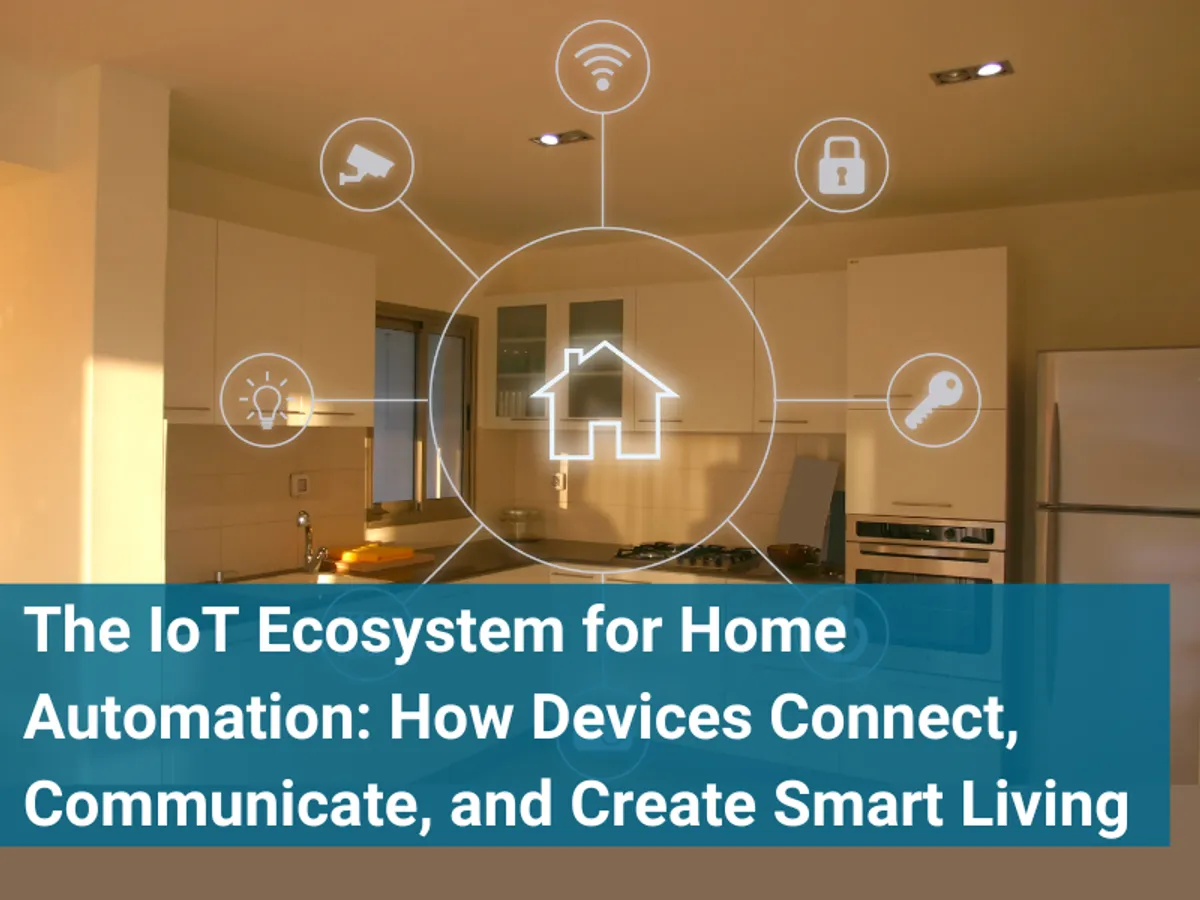
The Internet of Things (IoT) refers to the network of physical devices embedded with sensors, software, and connectivity that enables them to collect and exchange data. These “smart” devices range from wearable fitness trackers to industrial machinery and, increasingly, home appliances. The fundamental idea behind IoT is connectivity: devices communicate with each other and with centralized systems to create data-driven environments that adapt and respond in real time.
Quick Summary: Home automation applies IoT technology to everyday household functions — lighting, heating, security, and entertainment. This article breaks down the key components of a smart home ecosystem, from environmental sensors and smart actuators to connectivity protocols and edge computing. Whether you are a homeowner exploring automation or a developer building IoT products, understanding how these systems connect and communicate is the foundation for creating reliable, secure smart living spaces.
Home automation is the application of IoT technology within the household. It involves automating everyday functions like lighting, heating, air conditioning, security, and entertainment systems. Through home automation, users can control their environment remotely via smartphones or voice assistants, or let the system operate autonomously based on rules and sensor input. The result is a more responsive living space that offers convenience, efficiency, and security — all made possible by the broader IoT ecosystem.
What Are the Key Components of a Smart Home IoT System?
Environmental Sensors
Environmental sensors monitor ambient conditions inside and around the home. They track variables like temperature, humidity, air quality, carbon monoxide levels, and light intensity. By gathering this data, the system can optimize comfort and efficiency — adjusting heating based on humidity levels or activating window blinds depending on sunlight exposure. Common devices include smart thermostats like Nest and air quality monitors like Awair.
Motion and Presence Sensors
Motion and presence sensors detect movement or occupancy in specific areas of the home. Using infrared, microwave, or millimeter-wave technology, they enable lights to turn on when someone enters a room or trigger alarms when unexpected movement is detected. Advanced sensors can differentiate between humans and pets, or track body heat to determine presence. These sensors are essential for both convenience and security.
Contact and Vibration Sensors
Contact sensors are typically installed on doors, windows, or drawers. They register when these openings are accessed or tampered with and can alert users in real time. Vibration sensors detect impacts — like a window being forced open or broken. These are critical components for intrusion detection systems and can also trigger automatic locking mechanisms.
Smart Actuators and Controllers
Actuators and controllers carry out actions based on sensor inputs or user commands. These include smart bulbs, switches, plugs, thermostats, and motorized blinds. While they don’t gather data themselves, they respond to instructions from sensors or automation routines — dimming lights when a movie starts or locking the door at a set time.
Cameras and Audio Sensors
Smart cameras detect movement, recognize faces, and stream video to your phone. Audio sensors can identify specific sounds like glass breaking, alarms, or voices. These devices often integrate with motion sensors to create a more responsive, context-aware security system.
Energy Monitoring Sensors
Energy monitoring sensors track electrical consumption of individual appliances or entire circuits. They provide insight into energy use, helping identify waste and optimize consumption. Smart plugs with built-in meters or whole-home monitors like Sense allow homeowners to build energy-efficient routines and set alerts for unusual usage patterns.
For a real-world example of how these technologies come together, see this home automation case study by CodeBranch.
How Do Connectivity Networks Power a Smart Home?
For a smart home to function reliably, devices need consistent ways to communicate. Connectivity networks act as the pathways through which data flows between sensors, devices, hubs, and cloud platforms. Choosing the right protocol is critical for performance, security, energy efficiency, and device compatibility.
Wi-Fi
Wi-Fi is the most common protocol in smart homes, offering high bandwidth and wide device compatibility. It works best for devices that transmit large amounts of data — video doorbells, security cameras, and smart speakers. The tradeoff is higher power consumption and potential congestion when too many devices share the same network.
Zigbee and Z-Wave
These are low-power, mesh network protocols designed specifically for home automation. Devices pass signals from one to another, extending range and reliability. They are excellent choices for battery-operated sensors like motion detectors or door sensors, using significantly less energy than Wi-Fi.
Bluetooth Low Energy (BLE)
BLE is used for close-range communication with smartphones or wearables. While not suitable for large networks, it works well for individual devices like smart locks or health monitors.
Thread
Thread is a newer protocol built specifically for smart home applications. It is IP-based, secure, scalable, and supports self-healing mesh networks. Devices using Thread can communicate directly with each other without relying heavily on a central hub or router. The Matter standard from the Connectivity Standards Alliance builds on Thread to improve cross-platform interoperability.
The best smart home systems combine multiple connectivity types, selecting the most efficient protocol based on each device’s function, location, and power requirements.
What Challenges Should You Consider Before Building a Smart Home?
Despite the advantages of home automation, there are important challenges to address when designing or expanding a smart home system.
Privacy and Security
Smart devices connected to the internet can become vulnerable entry points for cyberattacks if not properly protected. Weak passwords, outdated firmware, and unsecured networks can expose personal data or allow unauthorized device control. CodeBranch builds IoT applications with security as a foundational requirement — including encrypted communications, secure authentication, and firmware update mechanisms.
Cost
Although individual smart device prices have dropped, building a fully integrated home automation system — including hubs, sensors, and cloud services — still requires meaningful upfront investment. Planning your system architecture before purchasing devices helps avoid compatibility issues and unnecessary spending.
Compatibility
Many smart devices are not universally interoperable, especially when they use different communication protocols or ecosystems. Choosing devices that support open standards like Matter, or that belong to the same platform (Apple HomeKit, Google Home, Amazon Alexa), helps ensure smoother integration and a better user experience.
How Does Edge Computing Make Smart Homes Faster and More Private?
In modern home automation, not all data needs to travel to the cloud. Thanks to edge computing, many smart devices process information locally — right where the data is generated. This approach reduces response time, improves reliability, and enhances privacy by limiting unnecessary data transfers.
At the center of local intelligence are smart hubs. These devices manage communication between sensors, lights, locks, and appliances. More than just routers, smart hubs serve as automation controllers: they translate between different protocols (Zigbee, Z-Wave, Wi-Fi), execute routines, and keep systems running even when the internet goes down.
By analyzing data at the edge, smart homes respond instantly to triggers — turning on a hallway light when motion is detected — without waiting for cloud instructions. This makes daily automation faster and more dependable. It also adds a critical layer of privacy, since sensitive data like voice commands or camera footage can be processed locally rather than transmitted across the internet.
Smart hubs range from brand-specific models like Amazon Echo and Google Nest Hub to flexible platforms like Samsung SmartThings or Home Assistant. Edge computing ensures your home is responsive, secure, and ready to act in real time.
What Does the Future of Home Automation Look Like?
Home automation is a practical, growing reality driven by the evolution of IoT. As devices, sensors, connectivity protocols, and edge computing technologies become more sophisticated and accessible, smart homes are transforming into responsive, efficient, and secure environments adapted to human behavior.
Understanding the key components of the IoT ecosystem — from environmental sensors and smart hubs to cloud platforms and network protocols — helps homeowners and developers build systems that are convenient, resilient, and forward-looking. If you are interested in developing or integrating a home automation system, CodeBranch can help you explore how these technologies can be tailored to your specific needs.
Frequently Asked Questions
What is the IoT ecosystem for home automation?
What are the most common connectivity protocols used in smart homes?
How does edge computing improve home automation?
What security concerns should homeowners consider with IoT devices?
Can CodeBranch develop custom home automation software?
CodeBranch Team
CodeBranch is an agentic software development partner for U.S. companies, from building new products to scaling existing ones — senior-led teams in Colombia, working U.S. hours. We deliver with AI-native pipelines and our own Spec-Driven Development framework, with quality and security built into every line of code.