Quick Summary
- ▸ Built for a semiconductor company (Fortune 500, 40,000 employees) in Santa Clara, CA, United States.
- ▸ A CodeBranch team built a platform for a semiconductor and hardware company to simulate and analyze what-if scenarios across its supply chain.
- Improved Planning Accuracy: The platform increased the accuracy of production forecasting by enabling data-driven evaluations of multiple what-if scenarios.
- Reduced Decision-Making Time: AI-assisted analysis significantly shortened the time required to assess supply chain contingencies and alternatives.
Overview
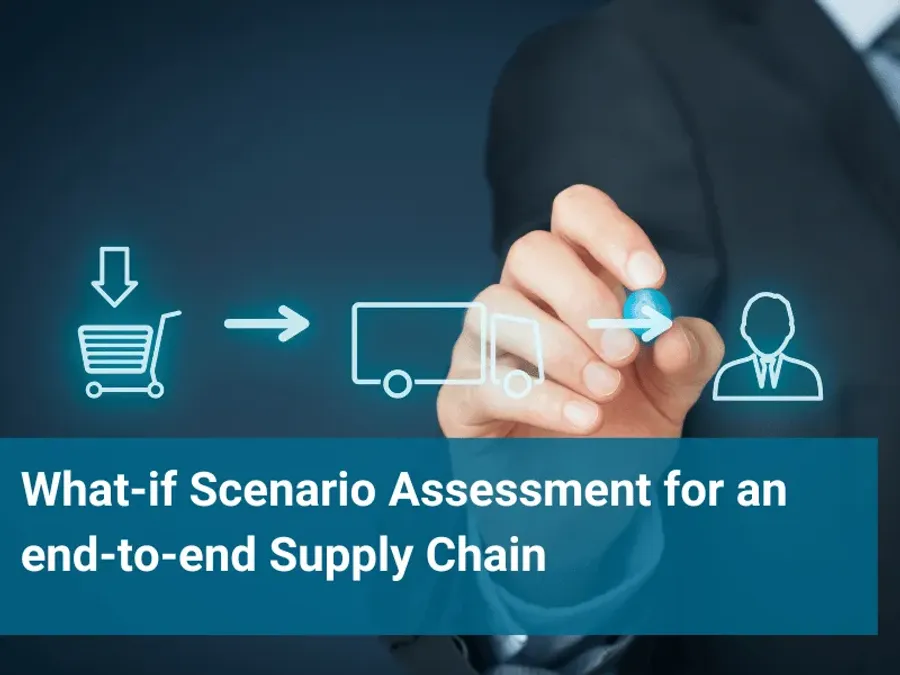
This project, developed by a dedicated CodeBranch team, focuses on building a specialized platform to evaluate potential scenarios within the supply chain of a semiconductor and hardware company. The tool enables production forecasting by considering different strategic objectives, demand variations, operational constraints, and potential contingencies. In doing so, it allows the simulation and analysis of multiple what-if scenarios, supporting planning and decision-making through accurate data and reliable projections. A key differentiator of this platform is the integration of an artificial intelligence agent, implemented by CodeBranch's development experts. The AI not only assists users in constructing hypothetical scenarios but also interprets the generated information, delivering actionable insights that optimize end-to-end supply chain management, reduce risks, and enhance responsiveness to market changes.
Watch the Case Study
Industries
Services Provided
Approach
The technologies used in this project are React, Nest.js, Next.js, Python, PostgreSQL, FastAPI, and LLama. The platform was designed with a modular architecture separating the frontend scenario-building UI from the backend simulation and AI interpretation engine. The AI agent leverages LLama to process and explain scenario outputs in natural language, making complex supply chain data accessible to non-technical decision-makers. The project team included a UX/UI designer, one QA specialist, four developers, a project manager, and a software architect.
Clutch Ratings
Results
- Improved Planning Accuracy: The platform increased the accuracy of production forecasting by enabling data-driven evaluations of multiple what-if scenarios.
- Reduced Decision-Making Time: AI-assisted analysis significantly shortened the time required to assess supply chain contingencies and alternatives.
- Risk Mitigation: By simulating demand fluctuations and operational constraints, the company enhanced its ability to anticipate disruptions and minimize risks.
- Operational Efficiency: Automated scenario creation and data interpretation streamlined supply chain planning, reducing manual effort and errors.
- Strategic Agility: The organization gained the capability to adapt quickly to market changes, strengthening competitiveness in the semiconductor and hardware sector.